Learning a piece in the fastest way possible
What happens when you actually apply the best practice strategies
I give my students a lot of practice advice that I honestly don't follow myself. Set clear goals before you start. Write down your fingerings early. Don't just play through the piece over and over. All solid advice. All things I tend to skip when nobody's watching.
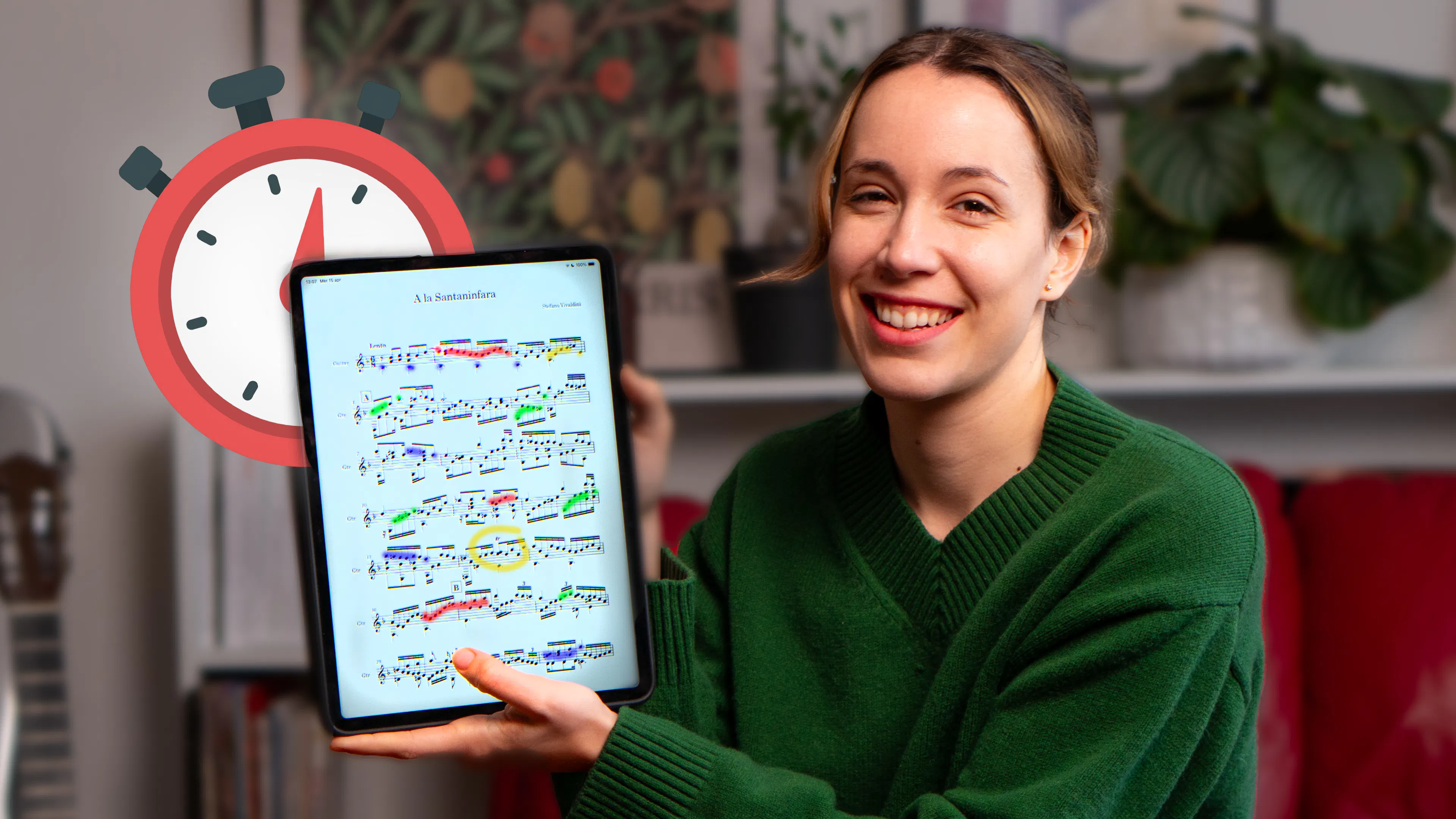
So I decided to run an experiment. I picked "A la Santaninfara" by Stefano Vivaldini, a piece I already knew from playing it as a duo, but never touched in its solo classical guitar version. I gave myself 3 days and one rule: do everything I tell my students to do. No shortcuts, no "I'll figure it out later."
Here's what happened.
Day 1: Before You Touch the Guitar
Coffee first. Always coffee first.
I sat down at the kitchen table with the sheet music on my iPad and a notebook. The score looked clean, almost too clean: no fingerings, minimal information. Just notes on a page waiting to be decoded.
Before picking up the guitar, I did something I always recommend and rarely do: I set goals. Specific ones, written down. For day one, I wanted three things. Understand the structure of the piece. Play through the whole thing once, slowly. And write down all the fingerings.
So I started reading. The piece is marked Lento, in 6/8, with one flat in the key signature. That gives us either F major or D minor. It starts on D, ends on a D minor chord. D minor it is. Something warm, something a little melancholic.
The structure broke down into clear sections: A, B, A again, and what looked like a coda. Knowing this before playing even a single note already made the piece feel less intimidating. It went from "a wall of notes" to "four rooms I need to walk through."
Then I played through it. Slowly, measure by measure, stumbling through the voices. And here's where discipline kicked in: normally I would have spent hours at this stage, just playing slowly, enjoying the sounds, getting lost. Instead, I moved on to the most important task of the day.
Why fingerings matter more than you think
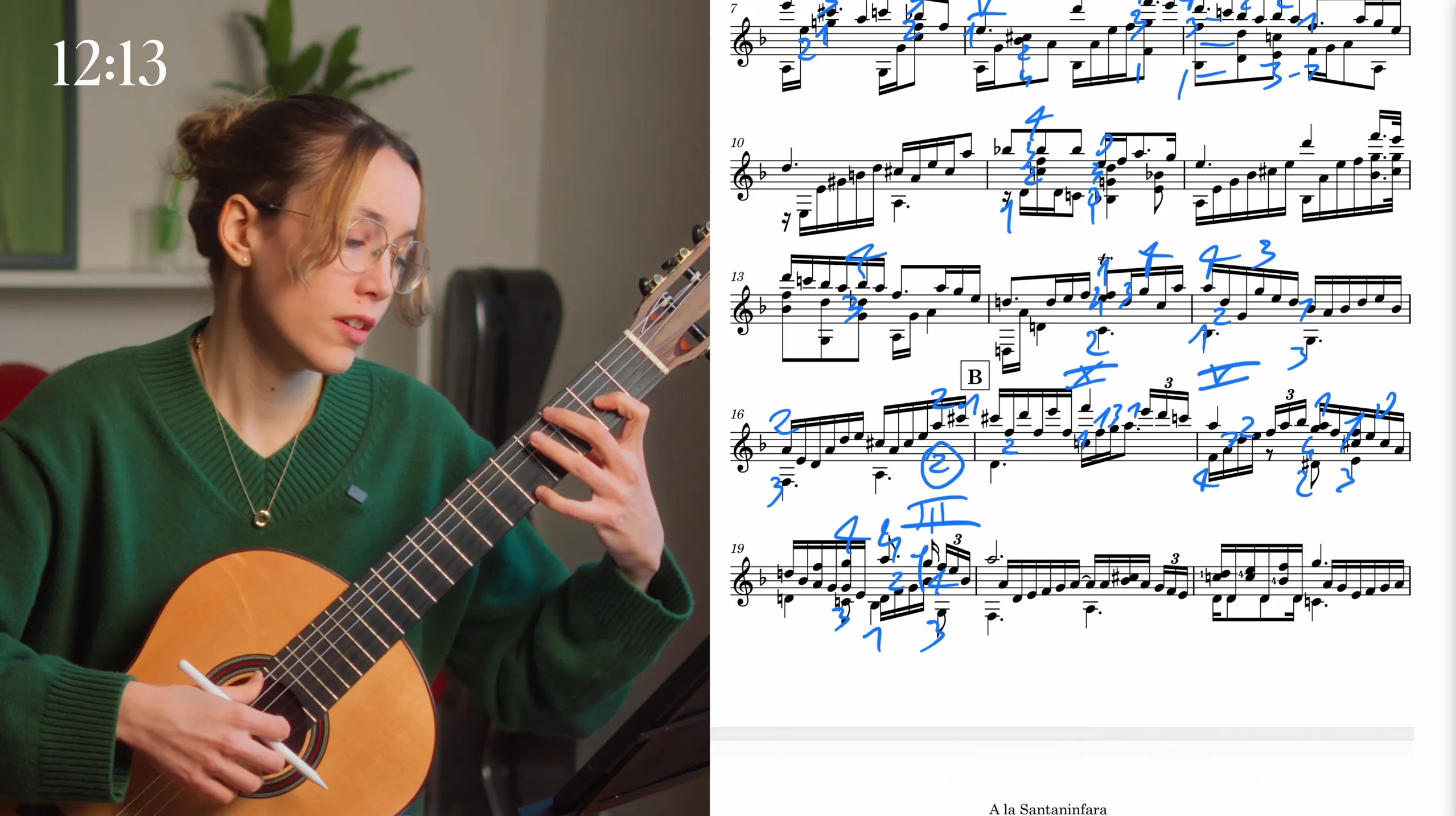
Writing down fingerings is tedious. Nobody enjoys it. But if your sight reading isn't great or the piece is complex, doing this early changes everything. Instead of recalculating finger positions every time you read a passage, your eyes see the number and your hand just goes. It removes an entire layer of mental processing from your practice.
I spent the rest of the morning writing them in, testing them, adjusting where they felt awkward. By the end, the score looked completely different from the clean page I started with.
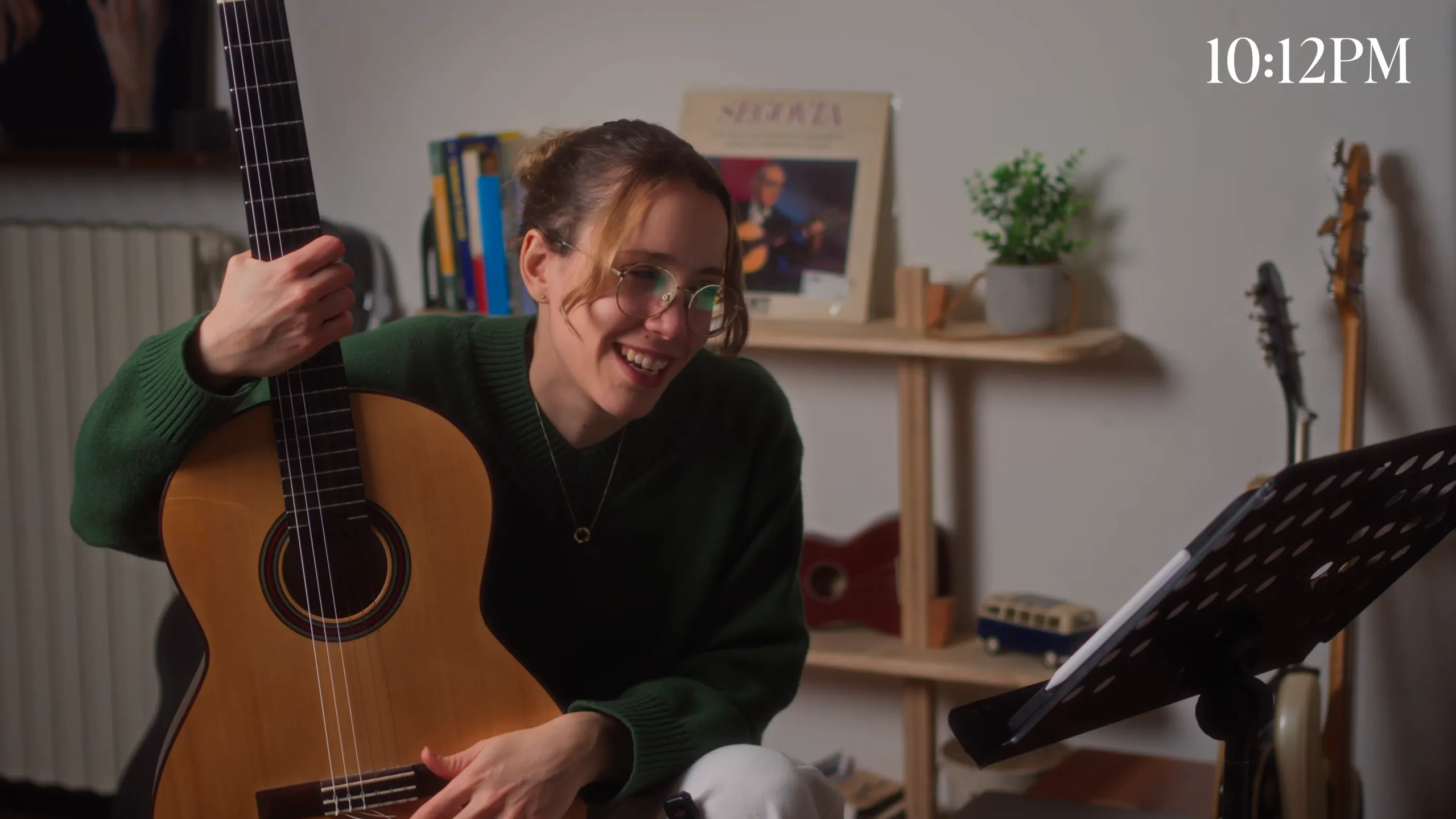
That evening, after a full day of teaching, I went back to the studio. Not for a structured session, just to play through the piece a few times with the new fingerings and see if any of them needed changing while they were still fresh. Two hours of relaxed playing. No goals, no pressure. Sometimes that's exactly what you need.
Day 2: New Guitar, New Room
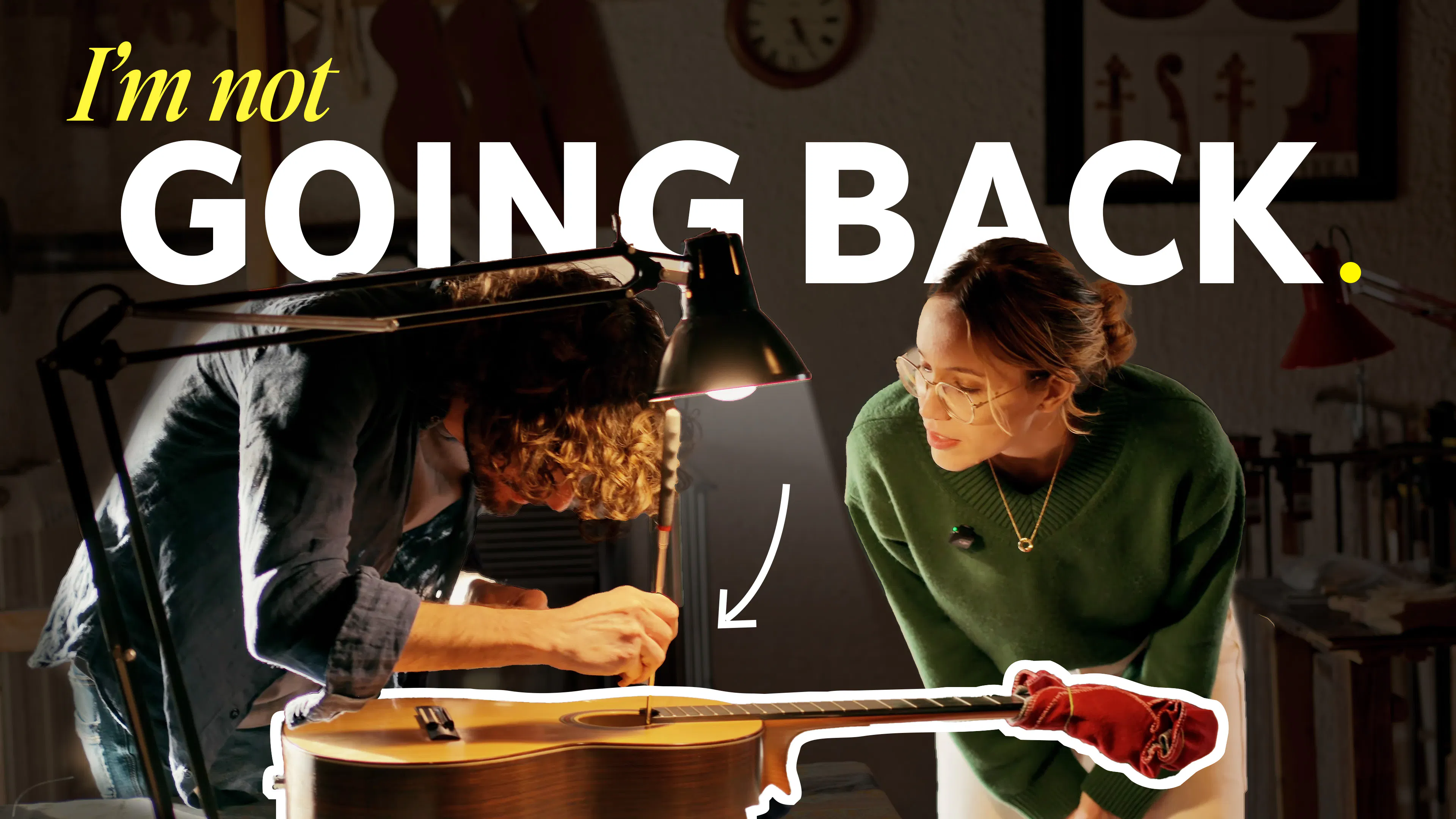
A box arrived from Poland. Inside: a new guitar from Turkowiak. I was supposed to practice on my usual instrument, but let's be realistic. Nobody leaves a new guitar in a box.
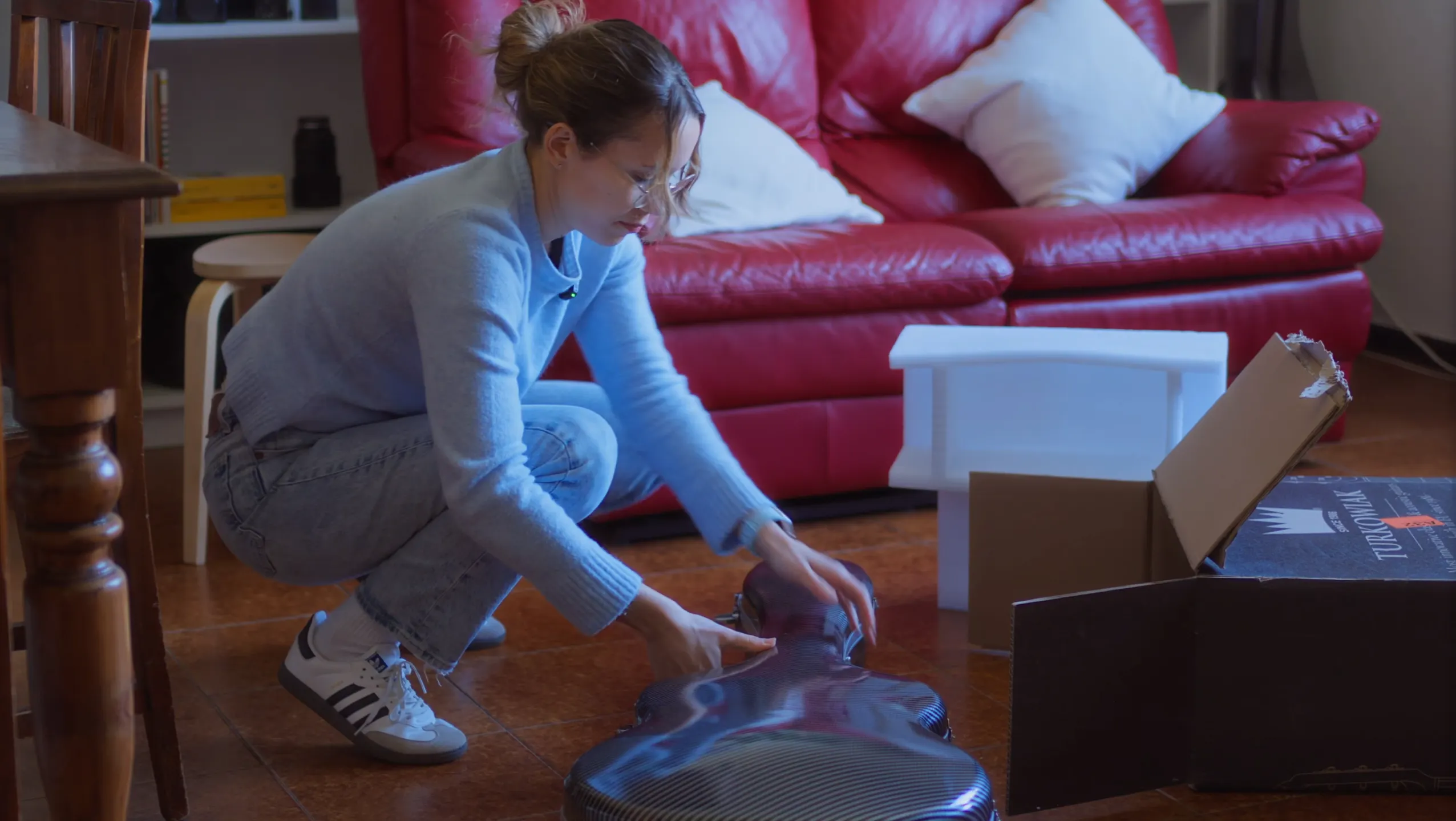
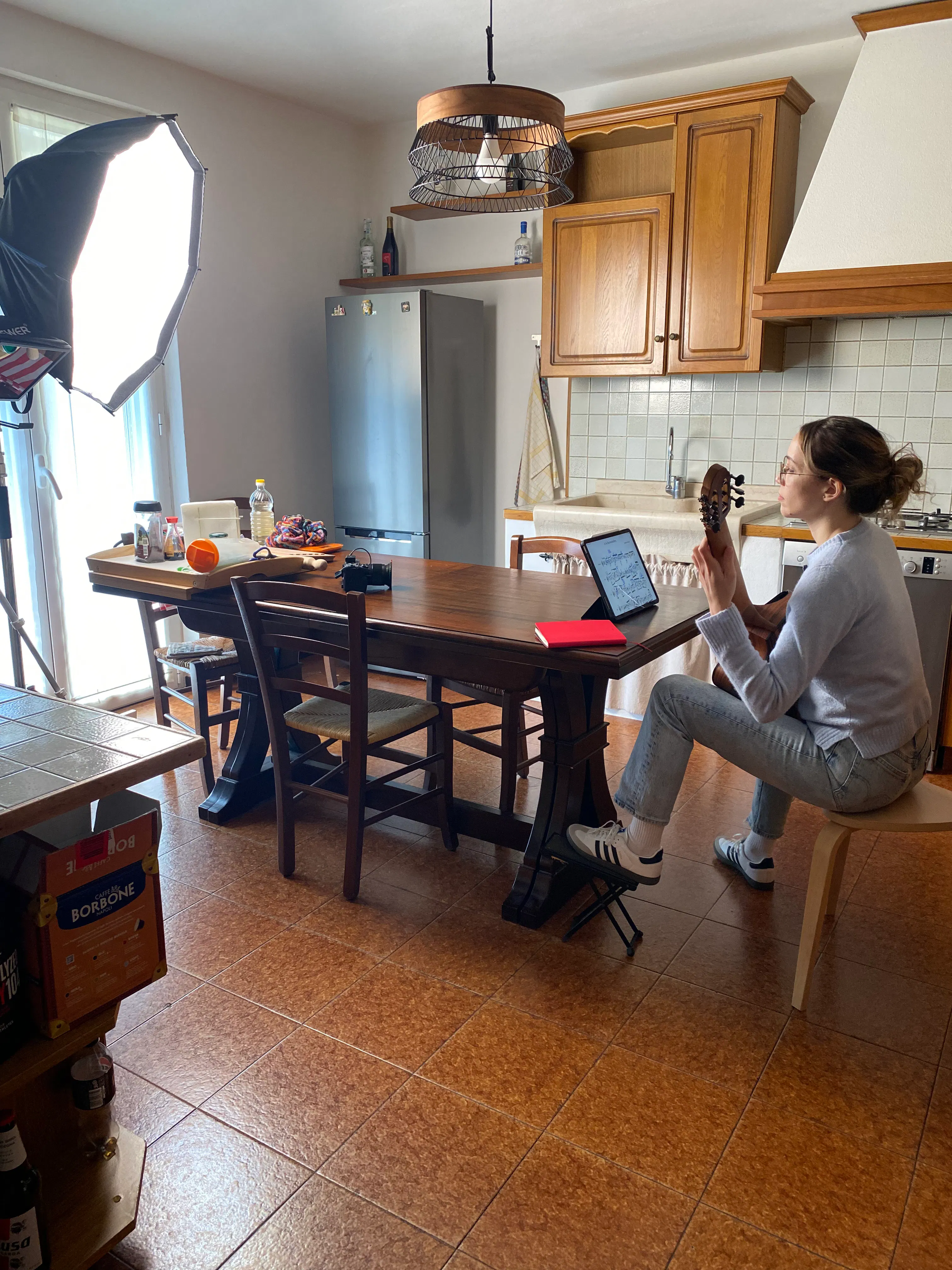
So day two became an experiment within the experiment. I practiced in the kitchen instead of the studio, on a guitar I'd never played before. And here's the thing: changing your practice environment is one of the best things you can do when learning a piece. A different room has different acoustics, and those different acoustics reveal things in your playing that you've been missing. Notes that sounded fine in the studio suddenly feel too harsh. A passage that felt smooth now exposes its rough edges.
I only had about 45 minutes, so I made them count. Warm up, play through twice, and then the exercise I care about most: left hand practice.
The left hand exercise
This one sounds strange, but it works. You play the piece with your left hand only, no right hand, no sound. Just fingers pressing strings in rhythm, with a metronome.
Why? Because most people think rhythm is a right hand problem. The right hand plucks, so the right hand controls the timing. But in reality, when your left hand is even slightly late arriving on a note, your right hand has to wait for it. That's where the tiny hesitations come from. That's what makes a performance feel uneven even when the player thinks they're playing in time.
It's exhausting. Ten minutes feels like an hour. But when I added my right hand back in, the difference was immediate. My fingers felt responsive, coordinated. Mistakes I had been repeating without noticing were just gone.
Day 3: the Mental Practice Test
I skipped a day. Life happened, no practice, and that's fine. When you're learning something, a missed day is not a failure. It's just a day.

When I came back, I decided to try mental practice: reading through the score without the instrument, imagining the sounds and the finger movements. It's a technique you hear a lot about in music education circles. I was curious.
My honest take? It didn't work for me. Not at this stage. Maybe it's more effective when you already know a piece deeply and you're reinforcing it. But when I picked up the guitar afterward, I didn't feel any improvement. Nothing had changed.
So I dropped it and moved to what actually mattered for day three: interpretation. Up to this point, I had been focused on getting the notes right. Now it was time to make them say something. Dynamics, phrasing, direction. Where does each section build? Where does it breathe? What do I want someone to feel when they hear this?
By the end of the day, I recorded a run through. Not a performance, but a first draft of one.
Conclusion
The piece isn't where I want it to be yet. It needs more time, more playing, more living with it. I'll keep practicing until it's ready to record properly.
But here's what stuck with me: it's not about how many hours you sit with your instrument. It's about what you do with the time you have. Some days you'll have the focus to analyze every note, isolate your left hand, work with a metronome. Other days you'll just want to play and enjoy the music, like I did at the end of day one. Both count. Neither is wasted.
When you're learning anything, the process is never a straight line. Motivation alone won't carry you through the flat stretches. Method helps. Consistency helps. And the small results you get from those two things are what keep the motivation alive when it starts to fade.
Download the Score
I've uploaded the sheet music for "A la Santaninfara" (solo guitar version) with all my fingerings written in. You can download it for free below and try the experiment yourself.
The piece was composed by Stefano Vivaldini, inspired by traditional Sicilian melodies from Alberto Favara's collection "Canti del mare e della terra di Sicilia." The music is under copyright, so if you perform or record it, please credit the composer.
Watch the Full Video
Everything in this post comes alive in the video, with the practice sessions, the new guitar unboxing, and the full day by day process.
With love, Roberta